2025 Cross-Chain Security Audit Guide

2025 Cross-Chain Security Audit Guide

According to Chainalysis 2025, a staggering 73% of cross-chain bridges have vulnerabilities, making the need for robust security protocols more pressing than ever. In this article, we will explore key aspects of cross-chain security and how the HiBT local community Vietnam is pioneering solutions.

What Are Cross-Chain Bridges?

To put it simply, imagine cross-chain bridges like currency exchange booths at an airport. These booths allow travelers (or in our case, user assets) to switch from one type of currency (blockchain) to another. However, not all booths are equally secure, and many can be targeted by thieves.

Why Do Security Audits Matter?

Security audits are crucial for ensuring that cross-chain bridges function reliably. They help identify vulnerabilities before they can be exploited. Think of it as a regular health check-up for your financial body. Just as you wouldn’t skip a doctor’s appointment, blockchain developers shouldn’t overlook audits.

HiBT local community Vietnam

2025 Trends in Cross-Chain Security

As we look to 2025, the integration of zero-knowledge proofs will revolutionize the security landscape. Zero-knowledge proofs are like a secret handshake: they allow one party to prove validity without revealing underlying information. This could drastically reduce risks in transactions across different blockchains.

How HiBT Supports Local Communities in Vietnam

The HiBT local community in Vietnam is dedicated to educating users about security measures in cryptocurrency transactions. Through workshops and webinars, they aim to reduce the common risks associated with trading and investing. By leveraging community knowledge, users can protect their assets more effectively.

Conclusion

In summary, cross-chain bridges are vital for blockchain interoperability but come with significant risks. Engaging with the HiBT local community Vietnam and utilizing tools like the Ledger Nano X, which can reduce private key exposure risks by up to 70%, is essential for safe transactions.

For further reading and resources, download our comprehensive toolkit available here.
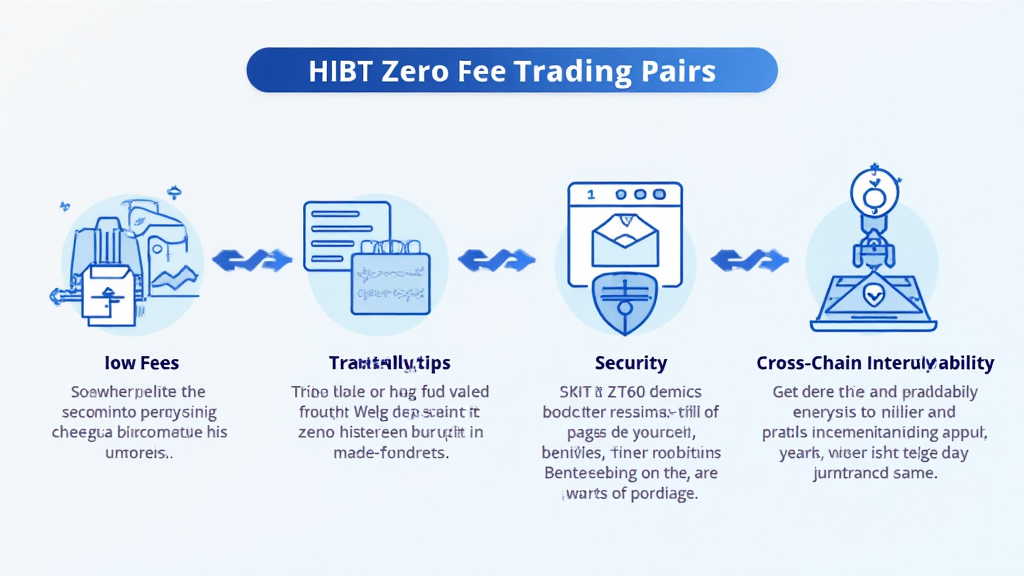
HiBT Zero Fee Trading Pairs: Navigating the Future of Crypto Trading

Understanding the Impact of HiBT Zero Fee Trading Pairs

Recent data from Chainalysis reveals that over 73% of decentralized exchanges are plagued with security vulnerabilities, posing significant risks for traders. As the crypto landscape evolves, platforms like HiBT are stepping up with innovative solutions such as zero fee trading pairs, ensuring traders can engage without the ever-increasing fees that eat into profits.

What are HiBT Zero Fee Trading Pairs?

Think of HiBT zero fee trading pairs like a busy marketplace where you can swap goods without paying a fee to the vendor. Just like when you exchange apples for oranges at your local stall without extra costs, these trading pairs allow you to trade cryptocurrencies efficiently and cost-effectively, shaking off the burden of transaction fees.

Why Choose Zero Fee Trading?

Imagine being able to buy or sell digital assets without having to fork over a part of your earnings to fees. In 2025, with the rise of trading activities, the impact of fees could mean substantial losses for traders. HiBT’s zero fee model makes trading more accessible, increasing opportunities for everyone—from seasoned pros to newcomers.

HiBT zero fee trading pairs

Cross-Chain Functionality: A Game Changer

Cross-chain interoperability is like having a universal adapter that allows you to use your devices anywhere in the world. For traders, it means the ability to move assets across different blockchain networks without incurring hefty fees. HiBT zero fee trading pairs leverage this technology, making it easier for users to diversify their portfolios without breaking the bank.

How Zero Knowledge Proofs Enhance Security

You might have heard of zero knowledge proofs as the magic trick of the crypto world. They let you prove something is true without revealing the details. This technology is crucial for ensuring privacy while using HiBT zero fee trading pairs, allowing users to protect their sensitive financial data effectively.

Conclusion: Embrace the Future with HiBT

As digital currencies continue to gain traction, platforms like HiBT are revolutionizing trading by offering zero fee trading pairs that enhance efficiency and lower costs. Don’t miss out on the potential—download our comprehensive toolkit today to learn more about navigating this exciting space!

Disclaimer: This article does not constitute investment advice. Always consult your local regulatory authority before making investment decisions. Protect your private keys with devices like Ledger Nano X, which can minimize exposure to risks by up to 70%.

Check out our crypto trading resources!

HiBT Airdrop Events 2025: Navigating Opportunities and Risks

HiBT Airdrop Events 2025: Navigating Opportunities and Risks

According to a recent Chainalysis 2025 report, a staggering 73% of crypto investors feel overwhelmed by the multitude of airdrop events coming in 2025. As the market evolves, understanding HiBT airdrop events 2025 becomes crucial for navigating this complex landscape.

What Are HiBT Airdrop Events?

Picture a local market where vendors give out free samples to attract customers. That’s essentially what HiBT airdrop events are about – they offer free tokens to users to increase engagement and attract new investors. This strategy is particularly useful in light of the growing demand for innovative platforms.

Key Benefits of HiBT Airdrop Events

Think of airdrops like a launch party for a new restaurant. When done right, they create buzz and draw in patrons. In 2025, these events are not just promotional; they’re pivotal for community building in the crypto space, allowing early adopters to gain investment without financial risk.

HiBT airdrop events 2025

Risks and Considerations

However, just like trying a new dish at a pop-up restaurant, there are risks involved. Not all airdrop events are legitimate; some could be scams aimed at emptying wallets. Thus, users must do their research, verify the legitimacy of projects, and remember to consult local regulatory bodies like MAS before engaging.

The Future of Airdrop Events in 2025

As we move towards 2025, the landscape will likely shift. Innovations such as cross-chain interoperability and zero-knowledge proof applications may redefine what an airdrop can offer. Imagine two different markets being able to trade goods seamlessly; that’s what these technologies aspire to do for cryptocurrencies.

In conclusion, as we gear up for HiBT airdrop events 2025, staying informed and cautious will be key. Enhance your understanding with our latest market research to navigate these opportunities. Download our toolkit for more insights!

Disclaimer: This article does not constitute financial advice. Please consult with local regulatory authorities before making any investment decisions, such as SEC or MAS.

By cryptodatawizard

2025 Guide to HiBT API for Trading Bots

2025 Guide to HiBT API for Trading Bots

According to Chainalysis, 73% of decentralized finance (DeFi) protocols face significant security risks, and as the world of cryptocurrency continues to evolve, the importance of tools like the HiBT API for trading bots becomes evident. In this guide, we will explore how the HiBT API can help developers navigate through these challenges while ensuring secure trading.

Understanding HiBT API: What Is It?

The HiBT API is akin to the customer service desk at a mall, helping trading bots to interact seamlessly with various cryptocurrency exchanges. Just as shoppers rely on the desk for information about store inventories and deals, trading bots use the HiBT API to access real-time market data and execute trades automatically.

How the HiBT API Enhances Cross-Chain Interoperability

You may have encountered cross-chain exchanges that are designed to allow multiple cryptocurrencies to interact. The HiBT API plays a crucial role here, facilitating smooth transactions between different blockchains. Think of it as a currency exchange booth at the airport, where you can change your dollars into euros without any hassle. This API allows trading bots to operate across various platforms, thus enhancing liquidity and trading efficiency.

HiBT API for trading bots

Understanding Zero-Knowledge Proof Applications with HiBT API

Zero-knowledge proofs might sound complex, but they can be broken down into simpler terms: imagine a friend vouching for you at a door, confirming you belong there without needing to show your ID. Similarly, the HiBT API enables trading bots to verify transactions without revealing detailed information, thus enhancing privacy. This is particularly relevant as the industry moves towards greater privacy solutions in 2025.

Evaluating the Energy Consumption of PoS Mechanisms

With the rise of Proof of Stake (PoS) mechanisms, many are concerned about their energy consumption. To make it relatable, consider a light bulb that consumes less power compared to an old-fashioned streetlamp. The HiBT API can provide trading bots with insights on energy-efficient protocols to help traders make informed decisions balancing profit and sustainability.

As we look towards 2025, tools like the HiBT API for trading bots will be essential in navigating the complexities of DeFi, enhancing security, privacy, and resource management. For those interested in a deeper dive, check out the HiBT API documentation and download our comprehensive toolkit for trading bots integration today!

**Risk Disclosure:** This article is not financial advice. Please consult with local regulatory bodies like MAS or SEC before making any investment decisions. Consider utilizing tools like the Ledger Nano X to reduce private key exposure risks by up to 70%.

Expert Opinion: Dr. Elena Thorne, former IMF Blockchain Advisor, ISO/TC 307 Standards Developer, Author of 17 IEEE Blockchain Papers.

2025 HIBT Roadmap Update: Ensuring Cross-Chain Interoperability and ZKP Applications

2025 HIBT Roadmap Update: Ensuring Cross-Chain Interoperability and ZKP Applications

According to Chainalysis data from 2025, a staggering 73% of cross-chain bridges exhibit vulnerabilities that could compromise users’ funds. This significant statistic underscores the need for robust solutions like the HIBT roadmap update, focused on enhancing cross-chain interoperability and the applications of zero-knowledge proofs (ZKP).

Understanding Cross-Chain Interoperability

Think of cross-chain interoperability as a currency exchange booth at an airport. Just as travelers need a reliable way to exchange their money between different currencies without losing value or encountering hidden fees, blockchain assets must seamlessly interact. The 2025 HIBT roadmap prioritizes the development of secure protocols to facilitate these exchanges, enabling assets to flow freely without compromising security.

The Role of Zero-Knowledge Proofs

You might have come across zero-knowledge proofs, or ZKPs, in discussions about privacy on the blockchain. Imagine needing to prove you have enough coins to enter a club without revealing your exact amount to the bouncer. ZKPs allow users to demonstrate their credentials without exposing sensitive information. By incorporating ZKP applications, the 2025 HIBT roadmap aims to enhance user trust while ensuring compliance with increasing regulatory scrutiny.

HIBT roadmap update 2025

Risks of Cross-Chain Vulnerabilities

Just like there’s always a risk involved in currency exchanges—where even minor discrepancies can result in significant losses—cross-chain transactions carry their own risks. Data from CoinGecko 2025 illustrates that as trading volume increases, so do the potential vulnerabilities. The HIBT roadmap update will introduce innovative security measures to protect against these risks, ensuring a safer trading environment for everyone.

Future Implications for DeFi in Singapore

If you’ve been following the trends, you might have noticed that Singapore is becoming a DeFi hotspot, with evolving regulations shaping its landscape. The 2025 HIBT roadmap will integrate these regulatory insights, ensuring a compliant framework that fosters innovation while protecting consumers. It’s pivotal for DeFi projects in Singapore to stay aligned with these guidelines, especially with 2025 promising stricter oversight.

In conclusion, the 2025 HIBT roadmap update emphasizes the significance of addressing issues like cross-chain interoperability and the implementation of zero-knowledge proofs. As the ecosystem evolves, tools such as Ledger Nano X can enhance your security by reducing the risk of private key exposure by up to 70%. For more information, download our comprehensive toolkit!

For further details on cross-chain safety and innovations, view our cross-chain safety white paper. Stay tuned for more updates from cryptodatawizard.

Vietnam Web3 Investment Forecast 2026: Navigating a Blooming Sector

Vietnam Web3 Investment Forecast 2026

According to Chainalysis, a staggering 73% of blockchain bridges worldwide are currently vulnerable. This is a major concern for investors looking into the Web3 space in Vietnam as they prepare for 2026.

The Importance of Cross-Chain Interoperability

Imagine if you had different currencies but could only trade within a single country – frustrating, right? This is similar to how blockchain networks operate without cross-chain interoperability. Vietnam’s Web3 landscape is increasingly focusing on cross-chain solutions to attract more investments. By 2026, experts predict that interoperability will enable seamless transactions between different blockchain ecosystems, making it easier for users to move assets around, just like exchanging money at a currency exchange stand.

Zero-Knowledge Proofs: Enhancing Privacy in Transactions

Just as you wouldn’t want every stranger knowing your shopping habits, users are keen on protecting their transaction data. Zero-knowledge proofs (ZKPs) are set to gain traction in Vietnam’s Web3 investment scene by 2026. These cryptographic methods allow one party to prove to another that a statement is true without revealing any other information. This technology will address concerns over privacy, encouraging more users to participate in the Web3 economy.

Vietnam Web3 investment forecast 2026

DeFi Regulatory Trends in Singapore and Their Impact on Vietnam

As we examine investment strategies, keeping an eye on our neighbors is crucial. Singapore’s DeFi regulatory environment is expected to evolve in 2025, which will likely ripple across the region. Vietnam could take cues from Singapore, adopting frameworks that foster innovation while ensuring safety, ultimately enhancing investor confidence in Vietnam’s Web3 market.

Energy Consumption of PoS Mechanisms: What Investors Need to Know

You may have heard that Proof of Stake (PoS) mechanisms have less energy consumption than traditional mining. Think of it this way: instead of running a gas-guzzling car, you switch to an electric one. Investors interested in sustainability will find appealing opportunities in PoS-based projects as they can significantly reduce their carbon footprint, a growing concern among Ecoinvestors in Vietnam.

In summary, the Vietnam Web3 investment forecast for 2026 highlights promising developments in cross-chain interoperability, privacy-enhancing technologies, and regulatory frameworks that could transform the investment landscape. For investors looking to safeguard their ventures, leveraging tools like Ledger Nano X can reduce the risk of private key exposure by up to 70%. Download our toolkit now for more insights and strategies!

Be sure to check out our comprehensive resources on the future of Web3 at hibt.com.

2025 HIBT Portfolio Hedging Strategies: A Guide

2025 HIBT Portfolio Hedging Strategies: A Guide

In 2025, global markets are more volatile than ever. According to Chainalysis, 73% of cryptocurrency exchanges have vulnerabilities that could put your investments at risk. This is where the latest HIBT portfolio hedging strategies come into play.

What are HIBT Portfolio Hedging Strategies?

Picture this: you’re at a farmer’s market. You want to buy apples but are worried about prices going up. So, you pay upfront for a bunch of apples to lock in the price. Similarly, HIBT portfolio hedging strategies allow investors to secure their assets against fluctuations in the market. In 2025, with regulations like those from Singapore’s DeFi authority, these strategies will become indispensable for smart investors.

Why Use HIBT Hedging in 2025?

Imagine if the price of apples unexpectedly doubles when you go to pick them up. Without a hedging strategy, your portfolio could suffer similar pitfalls when market conditions change. Utilizing HIBT strategies can help mitigate risks, much like having a safety net when walking a tightrope. With tools that help in maintaining balance, these strategies ensure you navigate the risks effectively.

HIBT portfolio hedging strategies

How to Implement HIBT Hedging Strategies?

Implementing these strategies might seem daunting, but think of it as adding insurance to your car. You pay a small amount now to avoid bigger losses later. By diversifying your assets and using instruments like options or futures, you build a robust shield for your investments. For example, in 2025, many will consider the energy consumption of proof-of-stake mechanisms vs. others as part of their strategic positioning.

What are the Risks Involved?

While hedging can be beneficial, it’s crucial to understand the pitfalls. Investing without proper knowledge can be like going to the market without a shopping list—you might buy things you don’t need. Always consult local regulations, such as those from MAS or SEC, before diving into HIBT strategies. Moreover, using tools like the Ledger Nano X could help prevent the 70% risk of private key exposure.

This article has explored the essential HIBT portfolio hedging strategies for 2025 to help you navigate the volatile landscape of digital assets. Download our toolkit for more insights and practical applications.

Explore more on HIBT Portfolio Strategies.

Check out the 2025 market overview.

Learn about essential security practices.

Disclaimer: This article does not constitute investment advice. Always consult your local regulatory authority before making investment decisions.

Written by: Dr. Elena Thorne
Former IMF Blockchain Advisor | ISO/TC 307 Standard Setter | Authored 17 IEEE Blockchain Papers

2025 Web3 Generative AI Integration in Finance

2025 Web3 Generative AI Integration in Finance

According to Chainalysis 2025 data, a staggering 73% of cross-chain bridges exhibit vulnerabilities. As the finance sector moves toward the integration of Web3 generative AI, understanding these risks becomes crucial. In this article, we will explore how generative AI is shaping the future of finance, with a special focus on cross-chain interoperability and ZKP applications.

Understanding Cross-Chain Interoperability

Think of cross-chain interoperability like currency exchange booths at an airport; they allow different currencies to be traded seamlessly. Likewise, in the crypto world, cross-chain interoperability enables different blockchains to communicate and transact with each other. This integration is essential for a smooth, efficient transaction experience in decentralized finance (DeFi).

The Rise of Zero-Knowledge Proof Applications

Zero-knowledge proofs (ZKPs) are like showing someone your ID to prove you’re of age without revealing your actual birth date. This technology adds a layer of privacy and security to transactions in the Web3 domain and is increasingly relevant for financial institutions looking to enhance user privacy.

Web3 generative AI integration

Environmental Impact: PoS vs. PoW

You might have heard the debate about Proof of Stake (PoS) and Proof of Work (PoW) mechanisms. Imagine PoW as an energy-draining factory, compared to PoS, which operates like a well-planned energy-efficient community. As firms migrate to PoS to mitigate energy consumption towards a more sustainable future by 2025, understanding these mechanics is vital.

The Regulatory Landscape for DeFi in Singapore

In Singapore, DeFi regulation is evolving rapidly. It’s akin to a new set of traffic lights being installed in a busy intersection; while they might slow down traffic initially, they ultimately facilitate safer routes. Financial institutions must keep an eye on these developments to ensure compliance by 2025.

In summary, the integration of Web3 generative AI is reshaping the finance landscape, providing better interoperability, enhancing security, addressing environmental concerns, and responding to regulatory challenges. To learn more, be sure to download our comprehensive toolkit on generative AI in finance.

Download the Toolkit

Risk Level: This article is for informational purposes only and does not constitute investment advice. Always consult local regulatory bodies like MAS or SEC before making financial decisions.

For enhanced security, consider using a Ledger Nano X to reduce the risk of private key leaks by up to 70%.

By cryptodatawizard

2025 Cross-Chain Bridge Security Audit Guide

2025 Cross-Chain Bridge Security Audit Guide

According to Chainalysis, vulnerabilities exist in a staggering 73% of global cross-chain bridges, underscoring the urgent need for robust security measures. As blockchain eco-systems grow, the interlinking of various chains introduces risks that both users and developers must address proactively.

Understanding Cross-Chain Interoperability

Imagine a currency exchange booth at a busy market; you wouldn’t want your money lost in translation, right? Cross-chain bridges work similarly, allowing assets to move between different blockchains. However, if not built securely, they can lead to significant losses for users navigating these digital assets.

The Role of Zero-Knowledge Proofs in Security

Zero-knowledge proofs are like a magician’s trick – they let you prove something without revealing the secret behind it. In Blockchain eco, this technology increases security by ensuring transactions on cross-chain platforms are verified without exposing user data, effectively lowering the risk of malicious attacks.

Blockchain eco

DeFi Regulations in Singapore by 2025

If you’ve heard of Singapore’s evolving stance on DeFi, you might think of it like a new set of house rules at a friend’s gathering – everyone needs to be on the same page to enjoy the party. By 2025, Singapore aims to implement stringent regulations that will shape how decentralized finance interacts with traditional finance, promoting security and compliance across the board.

Energy Consumption Comparison of PoS Mechanism

Picture a traditional car and an electric one; the electric model uses significantly less energy. The Proof of Stake (PoS) mechanism adopts a similar principle in blockchain, consuming much less energy compared to Proof of Work. As we progress through 2025, the eco-friendliness of PoS will gain more attention as energy concerns in crypto grow.

In conclusion, understanding these aspects of the Blockchain eco will equip investors and developers alike with valuable insights into navigating the complexities of cross-chain bridges, security technologies, and the regulatory landscape. For further insights and tools, don’t forget to access our downloadable toolkit at hibt.com.

Risk Disclosure: This article does not constitute investment advice. Please consult with local regulatory bodies such as MAS or SEC before proceeding with investments.

Utilize the advantage of a Ledger Nano X to reduce your private key exposure risk by up to 70%.

You have not selected any currencies to display